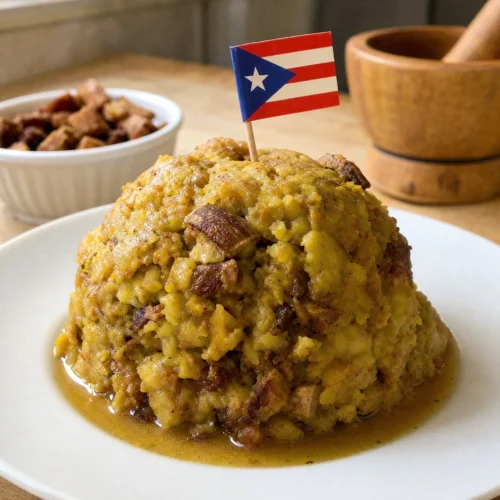
Mofongo con Chicharrón
Fried green plantains mashed with garlic and crispy chicharrón, Puerto Rican–style, formed into a dome and served warm.
Equipment
- Pilón (wooden mortar and pestle) — or a large bowl with a potato masher as a substitute
- Deep skillet or heavy pot for frying
- Slotted spoon
- Small bowl (for shaping the dome)
- Kitchen thermometer (for oil temperature)
Ingredients
For the plantains
- 4 green plantains peeled and cut into 1-inch slices (about 2.5 cm)
- 2 cups 475 ml neutral oil (vegetable or canola), for frying
For the mofongo
- 8 oz 225 g chicharrón (Puerto Rican–style fried pork belly), chopped into small pieces
- 4 garlic cloves peeled
- 2 tablespoons 30 ml olive oil
- 1 tablespoon 15 g butter
- ½ teaspoon adobo seasoning
- ¼ teaspoon salt plus more to taste
- 2-3 tablespoons 30–45 ml low-sodium chicken broth, as needed to moisten
Optional for serving
- Chicken broth for spooning over
- Garlic mojo or mojo isleño
- Lime wedges
Instructions
Prepare the plantains
- Peel the plantains: cut a shallow lengthwise slit through the skin, then peel by hand. Cut into 1-inch (2.5 cm) slices.
- Optional: soak the slices in salted water for 10 minutes, then pat completely dry. This step is not required but can make peeling and frying easier.
Fry the plantains
- Heat the oil in a deep skillet or pot to 350°F (175°C) — use a kitchen thermometer to check.
- Fry the plantain slices in batches (don't crowd the pan) for 8–10 minutes, flipping halfway through, until golden and fork-tender but not browned or crisp. Remove with a slotted spoon and drain on paper towels.
Mash the mofongo
- In the pilón, mash the garlic cloves with the adobo and salt until it forms a rough paste.
- Add the olive oil and butter, and mix into the paste.
- Working in small batches, add 3–4 pieces of hot fried plantain and a small handful of chopped chicharrón to the pilón. Pound and mix until just combined, with visible chunks remaining. Repeat with the remaining plantain and chicharrón, adding 1 tablespoon of broth at a time if the mixture feels dry.
Shape and serve
- Pack the mashed mixture firmly into a small bowl, then invert onto a plate to release it in a dome shape. Repeat for each serving.
- Serve warm, with chicken broth spooned over the top, alongside camarones guisados or carne guisada, or with garlic mojo on the side.
Notes
- Chicharrón note: Puerto Rican chicharrón is fried pork belly with the skin, cut into meaty, crispy pieces — different from bagged, puffed pork rinds. Buy it fresh from a Latin market or carnicería if possible, or fry pork belly at home until deeply golden and crisp throughout (this goes well beyond the 145°F/63°C minimum safe pork temperature, since the fat needs to render fully for the right texture).
- Salt guidance: Adobo and chicharrón are both salty on their own. Add the ¼ teaspoon salt gradually and taste before adding more.
- Substitution: If chicharrón isn't available, thick-cut bacon, cooked until crisp and chopped, is a common home substitute — though the flavor and texture will be milder.
- Vegetarian variation: Some households substitute sautéed mushrooms for chicharrón, though this is a modern adaptation rather than the traditional preparation.
- Storage: Best eaten fresh, since the chicharrón loses its crunch. Leftovers keep in an airtight container in the fridge for up to 2 days; reheat in a skillet with a splash of broth.
- Not to be confused with: Dominican mangú, which uses boiled (not fried) plantains and is topped with sautéed onions rather than mashed with pork.