
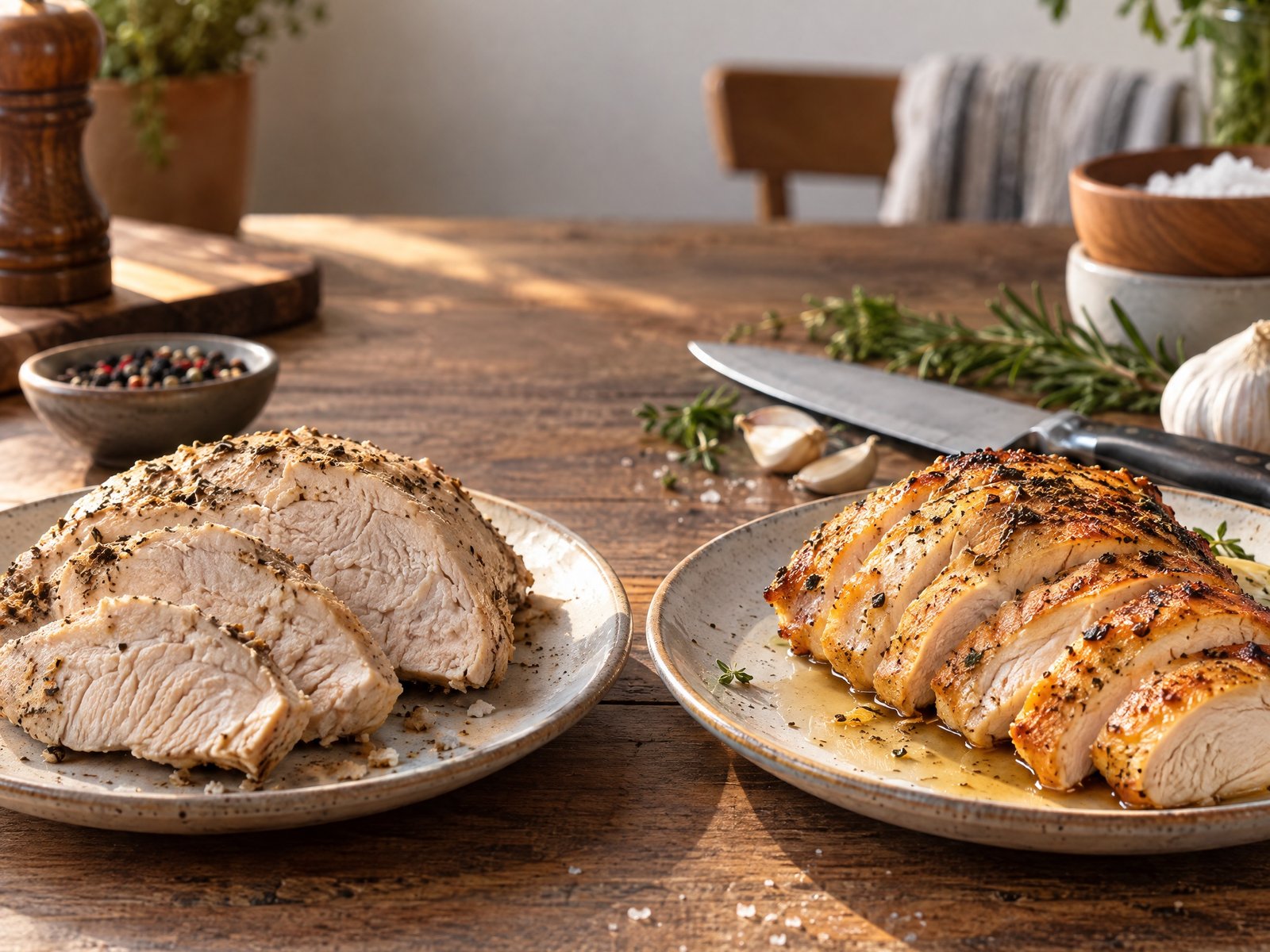
Why Does Chicken Turn Out Dry? 7 Common Mistakes and How to Fix Them
We’ve all been there.
The chicken looks beautiful in the pan. It smells great. Dinner is almost ready.
Then you cut into it—and somehow it’s dry, tough, and chewy.
The good news? You probably don’t need a more complicated recipe or expensive equipment. Dry chicken usually comes down to a few small cooking mistakes.
Once you understand what’s happening, getting tender, juicy chicken becomes much easier.
Here are seven common mistakes home cooks make—and what to do instead.
1. Your Chicken Breast Is Uneven
Take a close look at a typical boneless chicken breast. One end is usually thick while the other is much thinner.
That creates a problem.
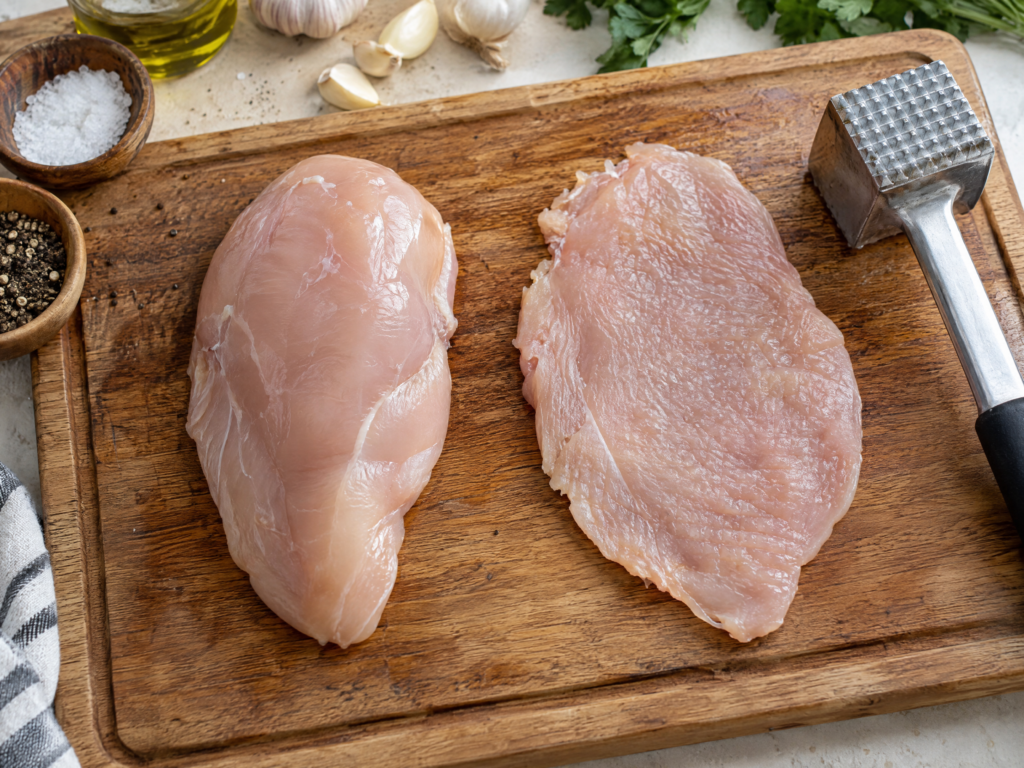
By the time the thickest part is properly cooked, the thin end may have spent too much time over the heat.
The simple fix is to make the chicken more even before cooking.
Place the chicken between sheets of parchment or inside a suitable food-safe bag and gently pound the thickest area with a meat mallet or another appropriate flat tool.
You aren’t trying to make it paper-thin. The goal is simply a more even piece of chicken that cooks at roughly the same rate from end to end.
This small preparation step can make a surprisingly big difference.
2. You’re Cooking Straight From the Package
Good chicken needs seasoning.
Salt doesn’t just make chicken taste salty—it helps ensure the meat is seasoned beyond the surface.
Instead of throwing an unseasoned chicken breast directly into a hot pan, season it properly before cooking.
You can keep things extremely simple:
- Salt
- Black pepper
- Garlic powder
- A little oil
Or take it in a Puerto Rican direction with adobo, oregano, garlic, or your favorite seasoning blend.
You don’t need twenty ingredients to make flavorful chicken.
3. You’re Cooking by Time Instead of Temperature
“Cook for 10 minutes” sounds convenient, but chicken breasts aren’t all the same size.
One may be thick. Another may be thin. Your pan may be hotter than someone else’s. Even two burners on the same stove can behave differently.
That’s why time should be treated as a guide—not proof that chicken is safely cooked.
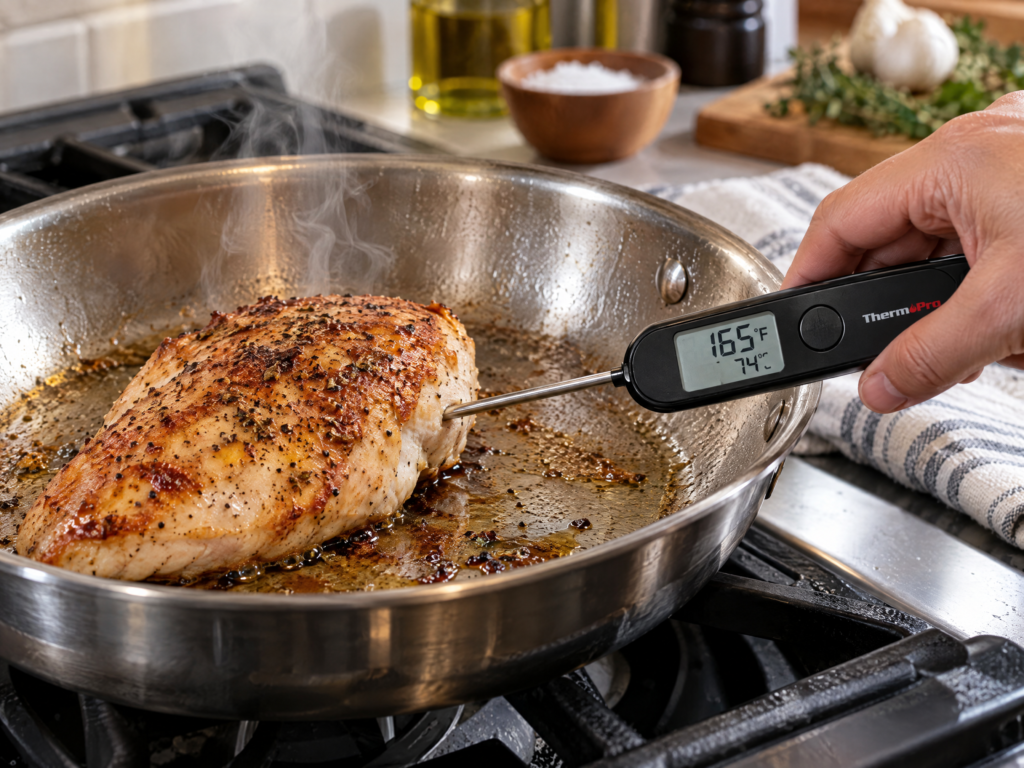
A food thermometer is one of the most useful inexpensive tools you can keep in your kitchen.
Insert it into the thickest part of the chicken without pushing it against the pan.
For food safety, chicken should reach a safe minimum internal temperature of 165°F (73.9°C).
Instead of repeatedly cutting the chicken open to see if it’s ready, check the temperature.
Less guessing. Better consistency.
4. You’re Using Too Much Heat for Too Long
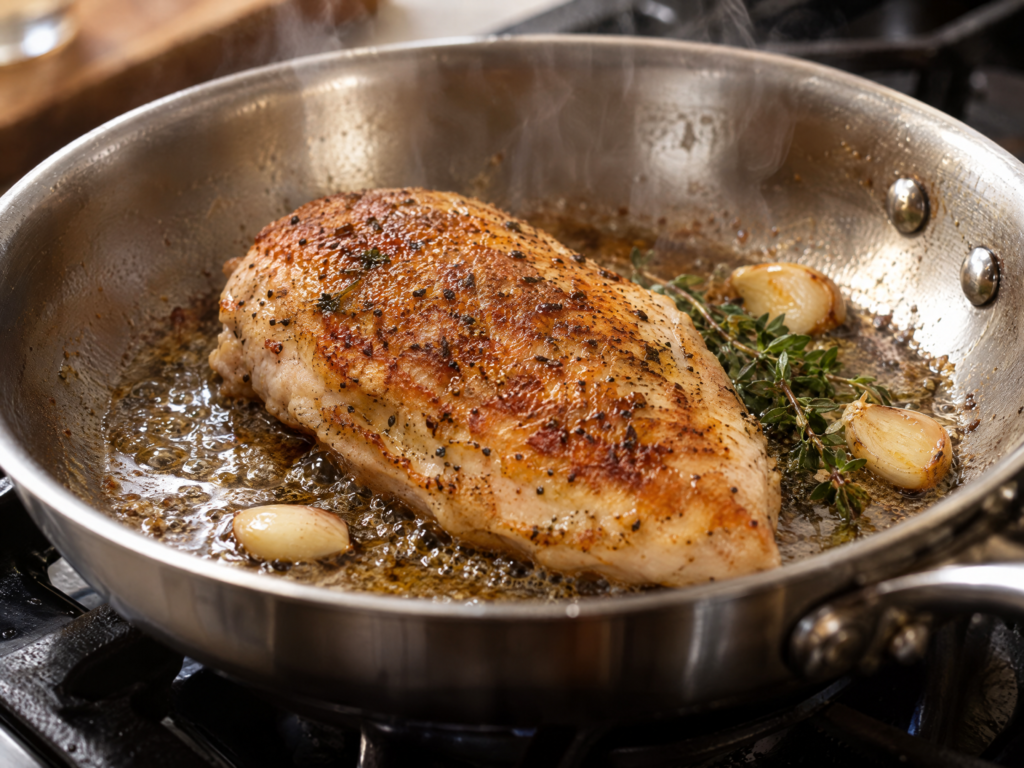
High heat is useful for browning.
But high heat for the entire cooking process can quickly turn a lean chicken breast from juicy to dry.
Think of heat as something you control—not simply “on” or “off.”
Depending on the recipe, you can use enough heat to develop an appetizing golden surface and then control the temperature so the center cooks without unnecessarily scorching or drying the outside.
And remember: darker doesn’t automatically mean better.
You’re looking for good browning while keeping the inside tender.
5. You Keep Cutting Into the Chicken to Check It
We’ve probably all done this.
You make a cut.
“Not ready.”
Two minutes later, another cut.
“Maybe now?”
Besides making the chicken look like it has been through surgery, repeatedly slicing it isn’t a reliable way to determine food safety.
Color and appearance alone aren’t dependable indicators that poultry has reached a safe temperature.
Use a food thermometer instead.
You’ll get a much clearer answer without constantly cutting into dinner.
6. You Slice It Immediately
The pan comes off the stove and everyone is hungry.
It’s tempting to immediately grab a knife.
But give the chicken a short rest before slicing.
While you shouldn’t leave cooked poultry sitting around for extended periods, a brief rest before cutting can improve the eating experience and gives you time to finish the rest of the plate.
Use those few minutes to finish your vegetables, rice, salad, or sauce.
Then slice the chicken and serve.
7. You’re Treating Every Chicken Cut the Same
Chicken breast, thighs, drumsticks, wings, and a whole chicken aren’t interchangeable.
Boneless chicken breast is relatively lean, so overcooking becomes noticeable quickly.
Chicken thighs contain more fat and connective tissue and behave differently when cooked.
That’s why a technique that works perfectly for thighs isn’t automatically the best technique for breasts.
Before cooking, ask yourself:
What cut am I actually working with?
Then choose your cooking method accordingly.
Bonus Hack: Stop Washing Raw Chicken
This one isn’t about dryness—but it’s important.
Washing raw chicken under the faucet isn’t necessary for food safety.
In fact, splashing water from raw poultry can spread bacteria onto the sink, countertops, utensils, and nearby foods.
Proper cooking—not rinsing—is what destroys harmful bacteria.
After handling raw chicken, wash your hands and properly clean anything that came into contact with the raw poultry or its juices.
And keep raw chicken away from foods that are already cooked or ready to eat.
The Simple Formula for Better Chicken
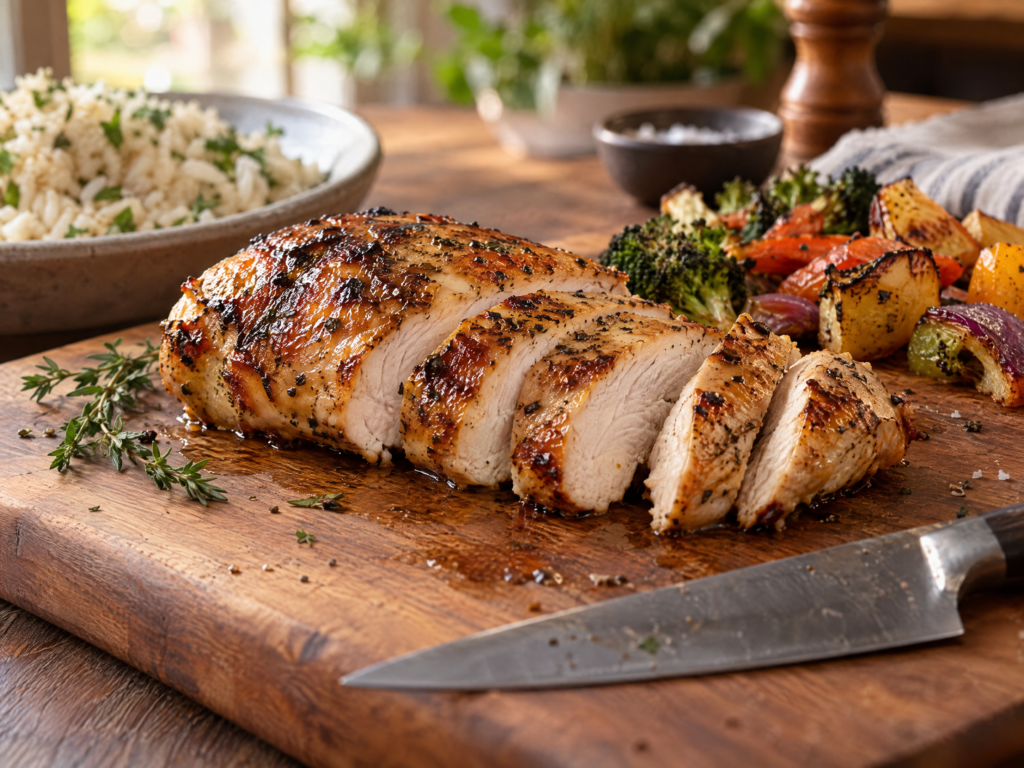
You don’t need restaurant equipment to make good chicken at home.
Remember these basics:
Make thick chicken breasts more even.
Season them properly.
Control your heat.
Stop relying only on the clock.
Use a food thermometer.
Avoid repeatedly cutting the chicken open.
And don’t automatically use the same cooking method for every cut.
Most importantly, don’t be afraid of chicken.
Once you stop guessing and start paying attention to thickness, heat, and temperature, cooking juicy chicken becomes much more predictable.
Sometimes the biggest kitchen improvements come from the smallest changes.
Cocina Hacks Tip: Keep an instant-read food thermometer close to your stove. It’s one of those simple kitchen tools you’ll wonder how you cooked without.