Bizcocho de Ron Puertorriqueño (Puerto Rican Rum Cake)
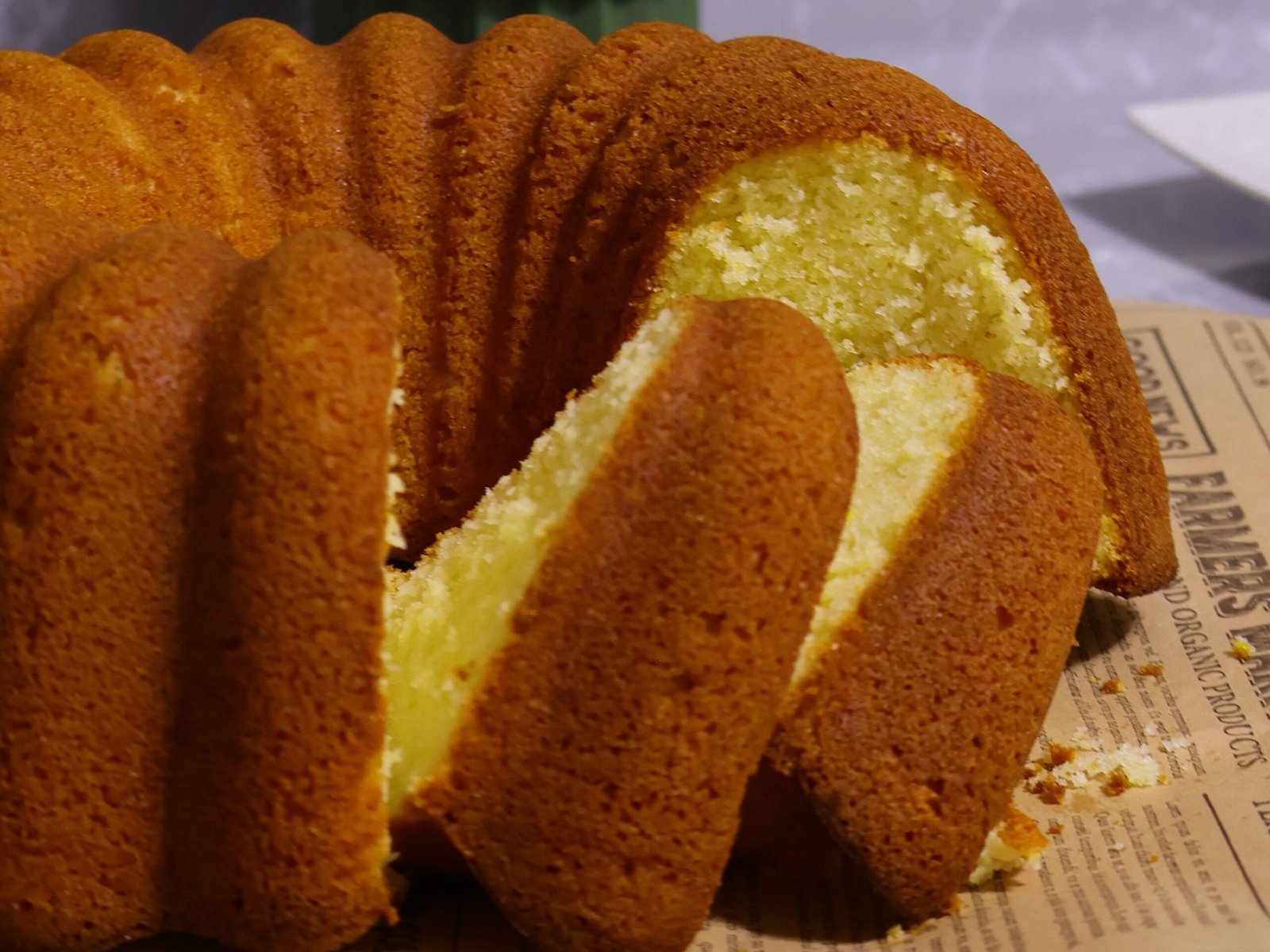
A good rum cake should still taste like cake. Beneath the rum aroma and buttery syrup, there should be a tender crumb that holds together when sliced. This Bizcocho de Ron Puertorriqueño starts with a vanilla butter cake, then receives its syrup gradually while still warm.
I wanted this version in the collection because it offers a dessert that can be finished before guests arrive. The Bundt pan provides the shape, the syrup adds moisture, and there is no frosting to prepare at the last minute. A modest slice is enough to appreciate the butter, vanilla, and rum together.
One name, different approaches
Bizcocho de ron does not describe one fixed formula. Café de Puerto Rico publishes a version made with honey, brown sugar, and spiced rum, baked in a round pan and finished with powdered sugar. That is a different approach from the syrup-brushed Bundt cake here. Puerto Rican Recipes!!
Rum cakes also carry personal baking histories. Jennifer Segal, writing at Once Upon a Chef, recalls discovering that her grandmother’s rum cake began with cake mix and instant pudding. She later developed a version from scratch. Her account is a reminder that a memorable family dessert can come from several starting points. Once Upon a Chef
This recipe uses flour, butter, eggs, and milk, with gold rum in both the batter and finishing syrup. The result is a butter cake with a rum soak, rather than a frosted celebration cake.
The syrup needs time to move into the crumb
The moment the cake leaves the oven is not the moment to pour everything over it. First, let it rest briefly in the pan so it becomes easier to handle. Unmold it while still warm, then make small holes with a thin skewer.
Apply the syrup in several passes. Brush the ridges and sides as well as the top, giving each application time to absorb. If liquid starts collecting around the base, pause and spoon it back over slowly.
This extra attention helps distribute the syrup instead of concentrating it in a few soggy patches. Let the cake cool before cutting so the crumb has time to settle.
Choose the rum for the flavor you want
Gold rum works well with the butter and vanilla in this version. White rum gives a lighter profile, while a heavily spiced rum changes the flavor more noticeably.
Use standard-strength rum rather than overproof. The syrup includes rum stirred in after the saucepan leaves the heat, so the finished cake contains alcohol and should not be presented as alcohol-free.
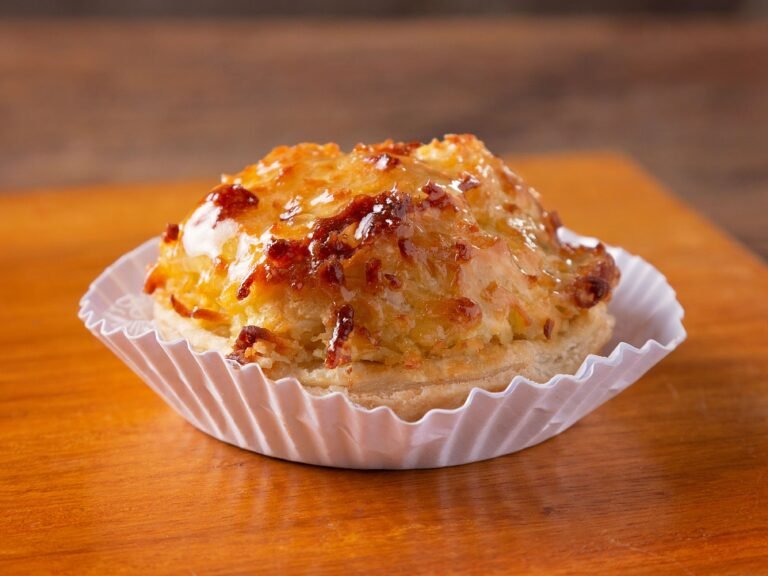
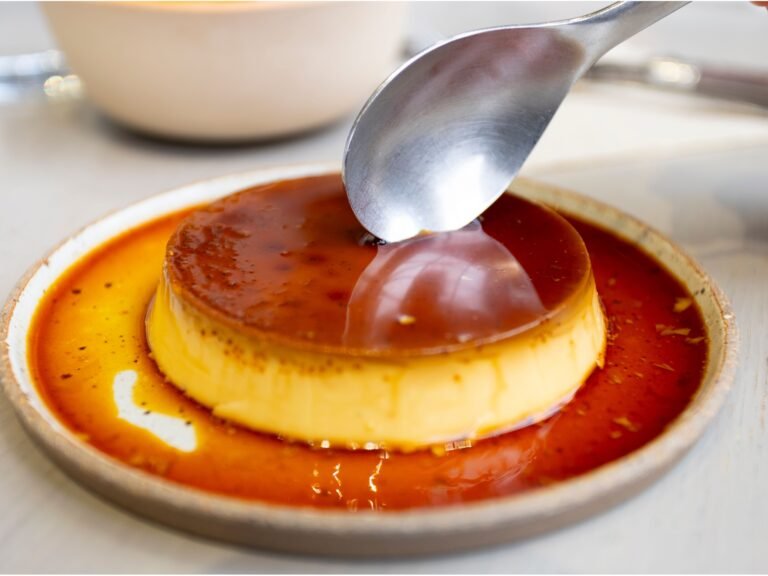
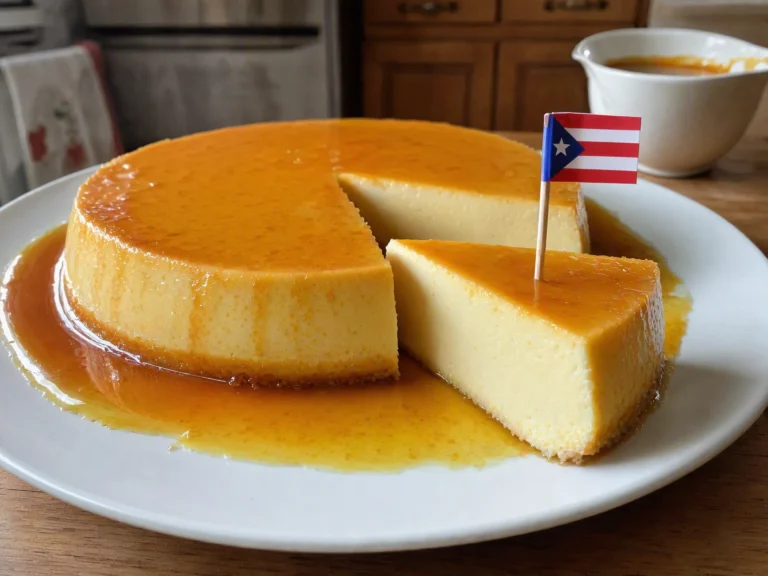
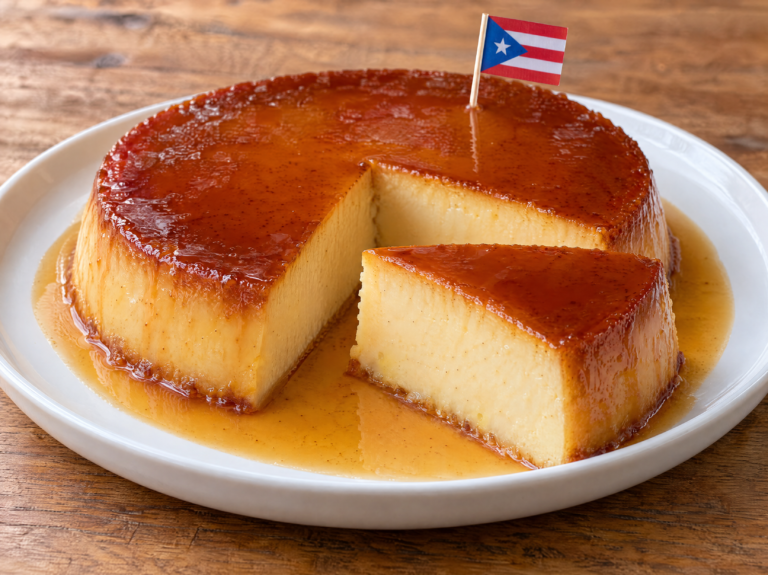
Serve it simply, with coffee if you like. For a dessert table with contrasting textures, Flan de Queso brings a smooth custard alongside the cake, while Besitos de Coco offer small, chewy coconut bites.
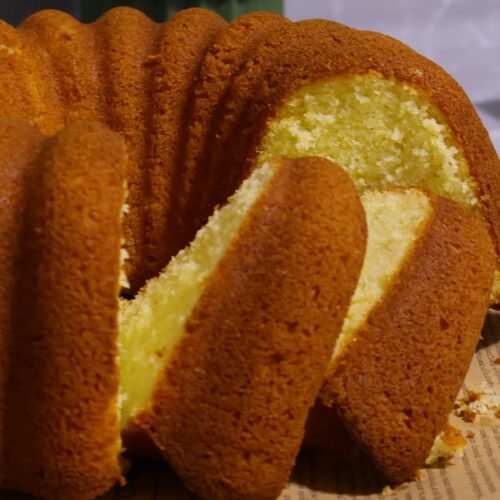
Bizcocho de Ron Puertorriqueño (Puerto Rican Rum Cake)
Equipment
- 12-cup Bundt pan
- Electric hand mixer or stand mixer
- Mixing bowls
- Measuring cups and spoons
- Kitchen scale, recommended
- Rubber spatula
- Small saucepan
- Wire cooling rack
- Wooden skewer
- Pastry brush
- Rimmed serving platter
Ingredients
For the cake:
- 2 1/2 cups all-purpose flour 300 g, spooned and leveled
- 2 1/2 teaspoons baking powder
- 1/2 teaspoon fine salt
- 1 cup unsalted butter 227 g, softened
- 1 1/2 cups granulated sugar 300 g
- 4 large eggs at room temperature
- 2 teaspoons vanilla extract
- 1/2 cup whole milk 120 ml, at room temperature
- 1/2 cup Puerto Rican gold rum 120 ml, approximately 40% ABV
For the rum syrup:
- 1/4 cup unsalted butter 57 g
- 1/2 cup granulated sugar 100 g
- 1/4 cup water 60 ml
- 1/4 cup Puerto Rican gold rum 60 ml
- 1 pinch fine salt
For the pan:
- Baking spray containing flour or softened butter and flour
Instructions
- Preheat the oven to 350°F (175°C), with a rack in the middle. Thoroughly coat a 12-cup Bundt pan with baking spray containing flour, including the center tube and all grooves. Alternatively, grease with butter, dust with flour, and tap out the excess.
- Whisk the flour, baking powder, and salt together in a bowl. In a separate measuring jug, combine the milk and the 1/2 cup of rum reserved for the cake.
- Beat the softened butter and sugar on medium speed for 3–5 minutes, until noticeably lighter and fluffy. Scrape down the sides and bottom of the bowl.
- Beat in the eggs one at a time, mixing until each is incorporated before adding the next. Mix in the vanilla.
- On low speed, add the flour mixture in three portions, alternating with the milk-rum mixture in two portions. Begin and end with the flour. Mix only until incorporated, then fold briefly with a spatula to check for unmixed flour at the bottom.
- Spoon the batter into the prepared pan and smooth the surface. Bake for 50–60 minutes, checking at 45 minutes. The cake is ready when a skewer inserted halfway between the center tube and outer edge comes out clean or with a few moist crumbs, but no wet batter.
- During the final 10 minutes of baking, prepare the syrup. Combine the butter, sugar, and water in a small saucepan. Bring to a gentle boil, stirring to dissolve the sugar, then simmer gently for 2–3 minutes.
- Remove the saucepan from the heat and move it away from any flame. Let the bubbling settle, then slowly stir in the remaining 1/4 cup rum and the pinch of salt. Do not ignite the syrup.
- Place the baked cake, still in its pan, on a wire rack for 10 minutes. Gently loosen any accessible cake edges if needed, then invert onto a rimmed serving platter and lift away the pan.
- While the cake is warm, make small holes over the top with a thin skewer, reaching into the crumb without piercing completely through the cake.
- Slowly brush or spoon the warm syrup over the top and sides in several passes, allowing each application to absorb before adding more. If syrup collects on the platter, spoon it back over the cake gradually. Pause if the surface becomes saturated.
- Let the cake finish cooling and absorbing the syrup before slicing, allowing about 2 hours total from the time it leaves the oven. Serve in modest slices.