Pollo al Horno (Puerto Rican Baked Chicken)
LOCAL NAME NOTE
“Pollo al horno” simply means “chicken in the oven” in Spanish, and versions of it exist across Latin America, so it’s worth being specific about what makes the Puerto Rican version its own. Puerto Rican pollo al horno leans on a dry-leaning adobo and sazón marinade — garlic, oregano, adobo seasoning, and often a packet of sazón with achiote for color — brightened with a bit of lime juice, and sometimes finished with sofrito. This is different from Dominican pollo al horno, which traditionally relies on a wet adobo built around sour orange (naranja agria) juice as its main marinade base. It’s also a different dish entirely from Peruvian pollo a la brasa, which is spit-roasted, and from pollo al carbón, a Mexican charcoal-grilled preparation with a chile-and-citrus marinade. Some Puerto Rican households use a whole chicken cut into pieces, while others prefer all thighs and drumsticks for extra juiciness — both are common and correct.
THE STORY BEHIND THE RECIPE
Pollo al horno is the kind of dish that shows up on Puerto Rican tables constantly, because it’s simple, forgiving, and stretches to feed a family without much fuss. The marinade does almost all of the work here — garlic, adobo, sazón, and a splash of lime go on the chicken, and the oven takes care of the rest. It’s the type of recipe most home cooks in Puerto Rico know by feel rather than by following a written formula, which is part of why so many households have their own small variations on it.
WHAT DOES IT TASTE LIKE?
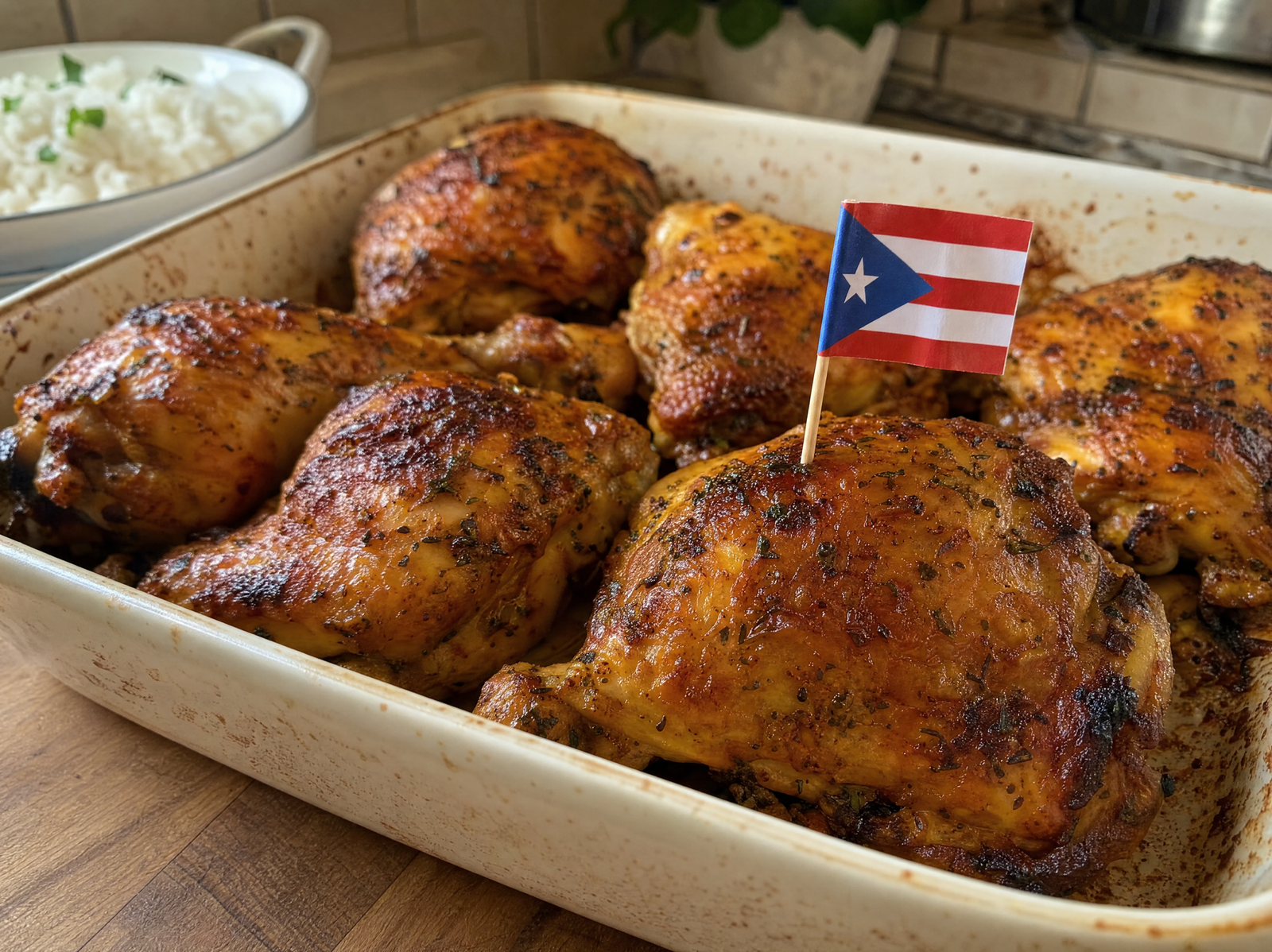
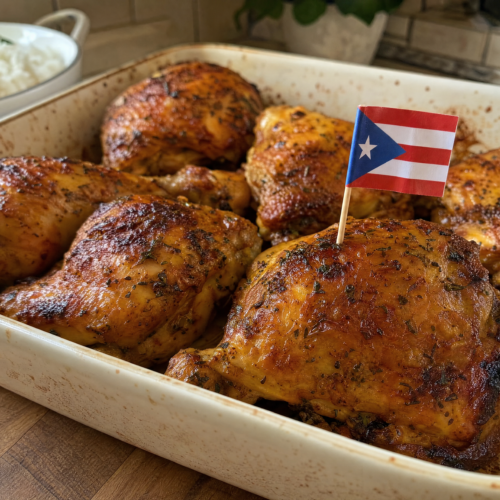
Pollo al horno tastes savory and garlicky first, with warm, earthy notes from the oregano and the achiote in the sazón coming through underneath. The lime juice keeps it from tasting heavy, adding a light brightness rather than a strong citrus flavor. The skin turns deeply golden and slightly crisp in the oven, while the meat underneath stays moist, especially if you’re using thighs and drumsticks.
WHY YOU SHOULD TRY IT
If you want an easy way into Puerto Rican home cooking, this is a great place to start. The ingredient list is short, the technique is just “marinate and bake,” and it pairs naturally with rice, beans, or tostones for a full plate. It’s also a reliable one to make ahead, since the chicken can marinate overnight and go straight into the oven the next day.
HELPFUL RECIPE TIPS
• Pat the chicken dry before marinating. Excess moisture on the surface keeps the marinade from sticking and the skin from browning well.
• Loosen the skin gently with your fingers and rub some of the marinade directly underneath it. This gets more flavor into the meat, not just on the surface.
• Don’t skip the resting time after baking. Letting the chicken sit for 5 to 10 minutes keeps the juices from running out the moment you cut into it.
• If the skin isn’t as golden as you’d like once the chicken is fully cooked through, broil it for the last 2 to 3 minutes, watching closely so it doesn’t burn.
• A meat thermometer is the most reliable way to know the chicken is done — don’t rely on cook time alone, since oven performance and piece size vary.
Pollo al Horno (Puerto Rican Baked Chicken)
Equipment
- Large mixing bowl
- Whisk
- Baking dish or rimmed sheet pan, large enough to hold chicken in a single layer
- Meat thermometer
- Tongs
Ingredients
Chicken
- 3.5 lbs 1.6 kg bone-in, skin-on chicken pieces (thighs and drumsticks), or a whole chicken cut into 8 pieces
Marinade
- 4 cloves garlic minced or 2 teaspoons garlic powder
- 2 tablespoons 30 ml olive oil
- 2 tablespoons 30 ml fresh lime juice about 1 lime
- 1 tablespoon 8 g adobo seasoning a salt-and-spice blend; use one with black pepper included
- 1 packet 0.16 oz / 4.5 g sazón with culantro y achiote
- 1 teaspoon 2 g dried oregano
- 1/2 teaspoon 1 g ground cumin optional
Optional Addition
- 1/4 cup 60 g sofrito homemade or store-bought
Instructions
Marinate
- Pat the chicken pieces dry with paper towels and place them in a large bowl.
- In a separate bowl, whisk together the garlic, olive oil, lime juice, adobo seasoning, sazón packet, oregano, and cumin (if using) until combined into a paste-like marinade. Stir in the sofrito if using.
- Pour the marinade over the chicken. Using your hands, rub it thoroughly over every piece, gently lifting the skin where possible to work some marinade underneath.
- Cover the bowl and refrigerate for at least 1 hour, or up to overnight for deeper flavor.
Bake
- When ready to cook, preheat the oven to 400°F (205°C).
- Arrange the marinated chicken pieces skin-side up in a single layer in a baking dish or on a rimmed sheet pan, leaving space between pieces so the skin can crisp.
- Bake for 45 to 55 minutes, until the skin is deeply golden and a meat thermometer inserted into the thickest part of the largest piece (avoiding the bone) reads 165°F (74°C).
- If you’d like the skin more browned, switch the oven to broil for the final 2 to 3 minutes, watching closely to prevent burning.
Rest and Serve
- Remove the chicken from the oven and let it rest, loosely tented with foil, for 5 to 10 minutes before serving.
Notes
• Substitutions: No sazón on hand? You can leave it out; the chicken will taste slightly less colorful and a touch less earthy, but still good. No adobo seasoning? Use 1 teaspoon salt, 1/2 teaspoon black pepper, and 1/2 teaspoon garlic powder in its place.
• Doneness: Chicken is safe to eat once it reaches an internal temperature of 165°F (74°C) at the thickest part. Juices should run clear, not pink.
• Family variations: Some households add sliced onions or bell peppers to the baking dish underneath the chicken. Others use a whole roasting chicken instead of pieces, which will need a longer cook time and should still be checked with a thermometer in the thickest part of the thigh.
• Storage: Refrigerate leftovers in an airtight container for up to 4 days, or freeze for up to 3 months. Reheat in the oven at 350°F (175°C) until warmed through.