
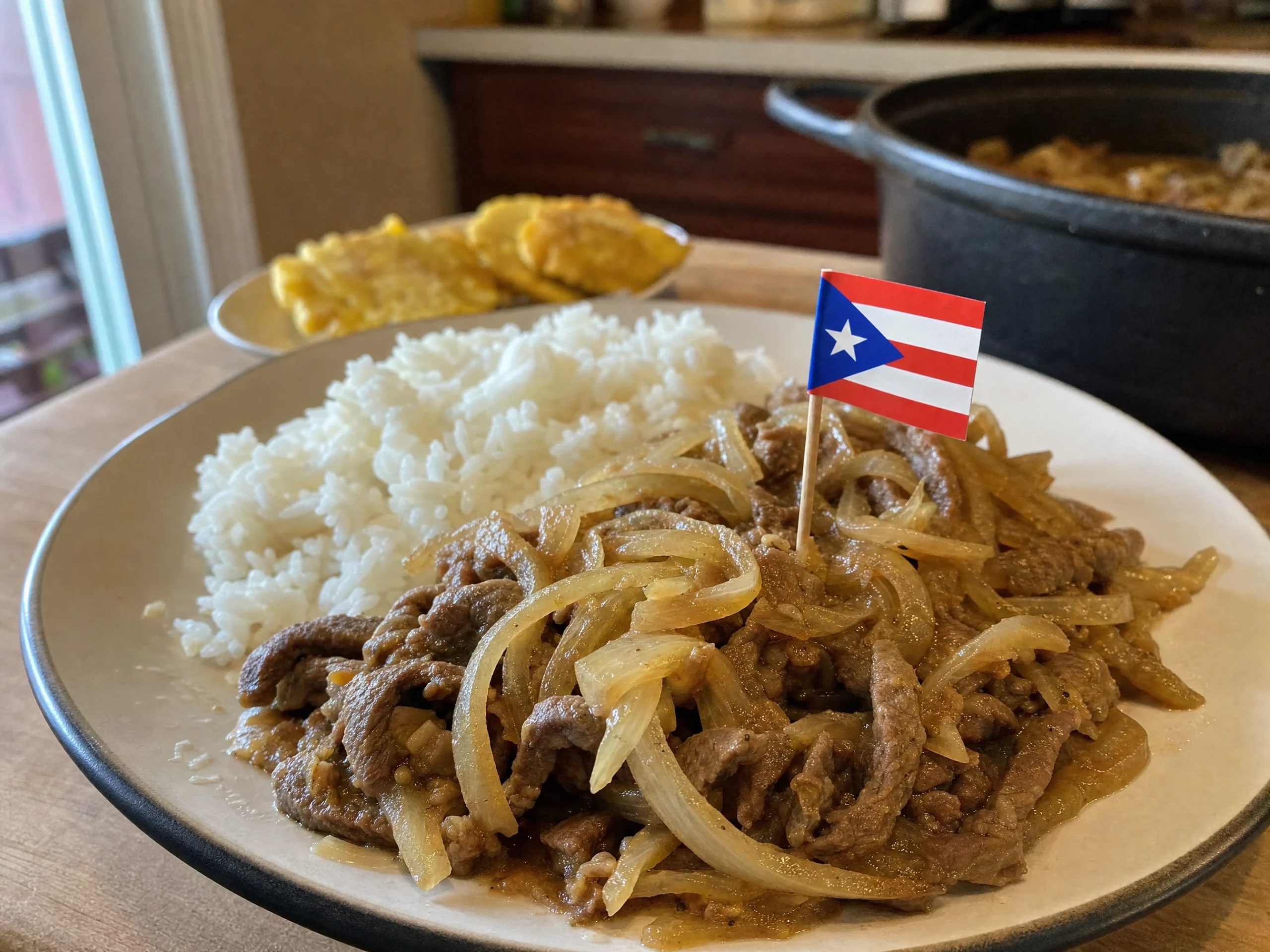
Bistec Encebollado (Puerto Rican Steak and Onions)
The onions deserve as much attention as the beef in bistec encebollado. They soften in the cooking liquid, adding a gentle sweetness that balances the vinegar, garlic, and savory seasonings. By the time the steak is tender, there’s a light gravy ready to spoon over rice.
That generous amount of onion is what appeals to me about this preparation. It becomes part of the sauce rather than a small garnish, giving a straightforward steak dinner plenty of flavor without a separate sauce to make.
This version uses cube steak or thin top round, marinated and then gently stewed. Like Puerto Rican carne guisada, it relies on a patient simmer, though the thinner pieces of beef and vinegar-based seasoning give it a different character.
Plan for the marinade first
Allow at least one hour in the refrigerator before cooking. The recipe combines white vinegar, olive oil, garlic, adobo, sazón, oregano, and sofrito, coating the meat before it goes into the pot. Overnight marinating is also an option when preparing ahead.
If using top round, pound it to approximately ¼ inch thick and cut it into manageable serving pieces. Keeping the thickness even helps the steaks cook at a similar rate.
When you’re ready to sear, lift the meat from the marinade and shake off the excess liquid, reserving what remains for the stew. Brown the steaks in batches so they have room to make contact with the hot pan. This step adds color and flavor; the covered simmer finishes the cooking.
Slice the onions into substantial rings, about ½ inch thick. Very thin slices can disappear into the gravy during cooking, while thicker ones retain more texture. Give them a few minutes in the same pot before returning the beef.
Add the reserved marinade and broth, bring the liquid to a boil, then lower the heat, cover, and maintain a gentle simmer. The marinade cooks with the stew; it isn’t a finishing sauce to pour over the plated meat.
Tenderness is the finishing point
Begin checking after 30–35 minutes of simmering. The onions should be fully softened, and the steak should separate easily under a fork. If the meat still resists, continue cooking gently and check again after another ten minutes. The cut and thickness affect how long it takes.
Taste the gravy before adding salt. Adobo and sazón already contribute seasoning, and their salt content varies between brands. Low-sodium broth helps keep that balance manageable.
The optional butter goes in at the end. Stirring it into the hot gravy gives the sauce a little extra richness and a glossy finish, but the dish is complete without it.
Serve the steak with plenty of onions and gravy over white rice. Tostones con ajilimojili add a crisp side to the tender beef.
If saving a portion for another meal, store the steak with its onions and cooking liquid rather than lifting it out dry. Refrigerate promptly and use within three days; the gravy helps keep the meat moist during gentle reheating.
Bistec Encebollado
Equipment
- Caldero or heavy Dutch oven with lid
- Meat mallet (if steak isn't pre-tenderized)
- Mixing bowl (for the marinade)
- Tongs
- Cutting board and sharp knife
Ingredients
For the marinade
- 2 lbs 900 g cube steak or thin top round steak, pounded to about ¼ inch thick
- ⅓ cup 80 ml white vinegar
- ¼ cup 60 ml olive oil
- 4 garlic cloves minced
- 1 tablespoon 15 g adobo seasoning
- 1 packet about 5 g sazón with culantro y achiote
- ½ teaspoon dried oregano
- 2 tablespoons 30 g sofrito (store-bought or homemade)
For the stew
- 2 tablespoons 30 ml vegetable oil, for searing
- 2 large yellow onions sliced into ½-inch rings (about 500 g)
- 1 cup 240 ml low-sodium beef broth
- 2 tablespoons 28 g cold butter, optional, for finishing the gravy
- Fresh cilantro chopped, for garnish (optional)
Instructions
Marinate the steak
- If the steak isn’t already tenderized, pound it between two pieces of parchment paper to about ¼ inch thick. Pat dry and cut into serving-size pieces.
- In a mixing bowl, whisk together the vinegar, olive oil, garlic, adobo, sazón, oregano, and sofrito.
- Add the steak to the marinade and turn to coat evenly. Cover and refrigerate for a minimum of 1 hour, or overnight for deeper flavor.
Sear the steak
- Remove the steak from the marinade, shaking off excess liquid, and reserve the remaining marinade.
- Heat the vegetable oil in a caldero or heavy pot over medium-high heat.
- Sear the steak in batches, 1–2 minutes per side, until browned on the outside (it won’t be cooked through yet). Remove and set aside. Avoid crowding the pot.
Stew with onions
- Add the sliced onions to the same pot and cook for 3–4 minutes, stirring occasionally, until they begin to soften.
- Return the steak to the pot along with the reserved marinade and the beef broth.
- Bring to a boil, then reduce the heat to low, cover, and simmer for 30–35 minutes, until the steak is fork-tender and the onions are fully softened. The steak’s internal temperature will be well above the safe minimum of 145°F (63°C) by this point.
- If you’d like a richer gravy, stir in the cold butter during the last minute of cooking until melted and glossy.
- Garnish with chopped cilantro and serve hot.
Notes
- Cut substitution: Cube steak is traditional because it’s pre-tenderized, but thin top round or sirloin works well too — just pound it thin and be sure to simmer long enough for it to become tender.
- Salt guidance: Adobo and sazón both contain salt, so taste the gravy before adding more. If you’re using a low-sodium adobo blend, you may want to add a small pinch of salt.
- Sofrito substitution: If you don’t have sofrito on hand, an extra clove of minced garlic and a few tablespoons of diced green pepper and onion can stand in.
- Doneness check: The steak is done when it shreds easily with a fork — if it still feels tough after 35 minutes, simmer for another 10–15 minutes.
- Storage: Keeps in an airtight container in the fridge for up to 3 days, or in the freezer for up to 3 months. The flavor deepens the next day.
- Serving suggestion: Traditionally served over white rice with tostones or fried sweet plantains on the side.

One Comment