Puerto Rican Sancocho – Beef and Root Vegetable Stew
LOCAL NAME NOTE
The local name is Sancocho. In some Puerto Rican cookbooks and kitchens, a similar preparation may also be called Ajiaco Criollo.
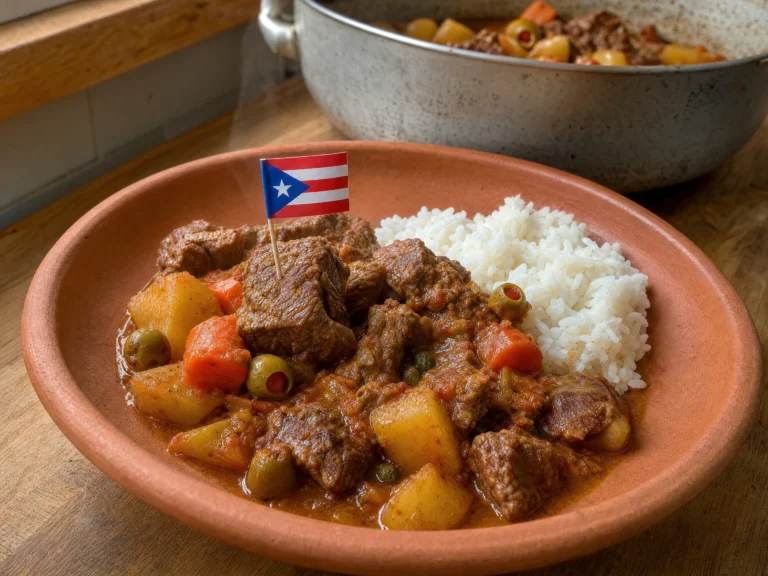
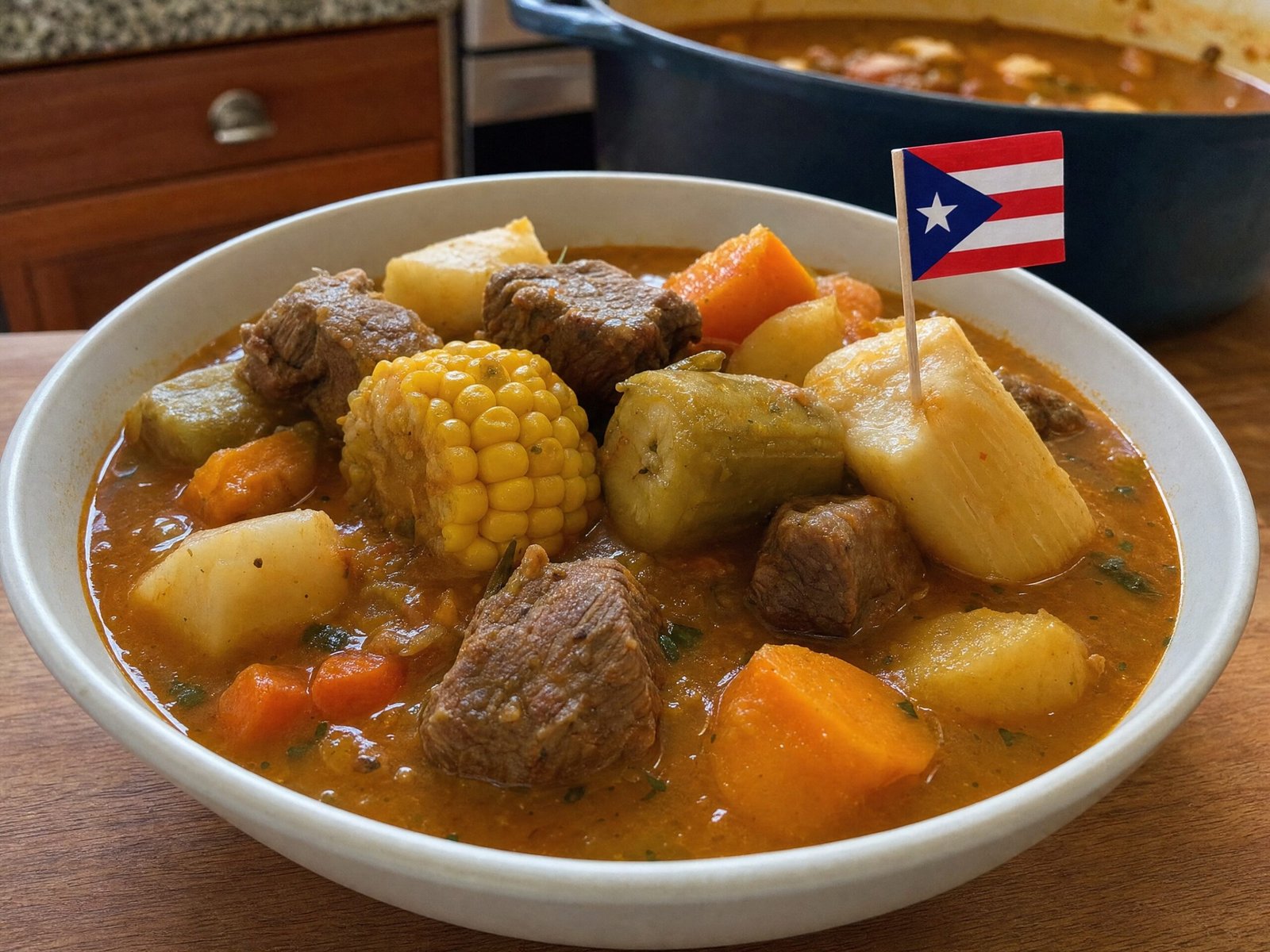
Sancocho is prepared throughout the Caribbean and Latin America, but the ingredients differ by country and family. This Puerto Rican version uses beef, sofrito, sazón, green plantain, yuca, yautía, calabaza, corn and potatoes.
THE STORY BEHIND PUERTO RICAN SANCOCHO
Sancocho is not a soup that needs to be rushed. Its flavor develops slowly as the beef becomes tender and the root vegetables release their starch into the broth.
What begins as a pot of firm vegetables and seasoned beef gradually becomes thick, rich and comforting. The calabaza softens into the broth, while the yuca, yautía, plantain and potatoes make every serving filling.
The exact combination of vegetables can change depending on what is available, but the goal remains the same: a generous one-pot meal with enough flavor and substance to share.
WHAT DOES SANCOCHO TASTE LIKE?
Puerto Rican sancocho has a deeply savory, sofrito-forward broth with a mild tomato flavor. It is aromatic and well seasoned without needing to be spicy.
The beef becomes tender, while the root vegetables provide different textures. Yuca is dense and starchy, yautía is creamy, green plantain is firm and earthy, and calabaza adds gentle sweetness while naturally thickening the broth.
Corn and carrots add a little more sweetness, creating a balanced stew that tastes rich without being heavy or greasy.
WHY YOU SHOULD TRY IT
Try this recipe when you want a complete meal prepared in one large pot. It is warm, filling and packed with tender beef and vegetables.
Sancocho is also a good recipe for feeding a family or preparing several meals ahead. The broth becomes even more flavorful after the ingredients have rested together overnight.
HELPFUL RECIPE TIPS
• Use beef chuck or meat labeled for stewing. Lean, quick-cooking steak will not become as tender.
• Cut the vegetables into large, even pieces so they do not disappear into the broth.
• Add the potatoes and calabaza later than the firmer root vegetables.
• Use low-sodium beef broth because adobo and sazón already contain salt.
• Do not boil the stew aggressively. A gentle simmer makes the beef tender without breaking the vegetables apart.
• If using frozen peeled yuca, add it directly from frozen and allow a few additional minutes of cooking.
• Sancocho should be thick and brothy, not completely dry. Add a little hot water if it reduces too much.
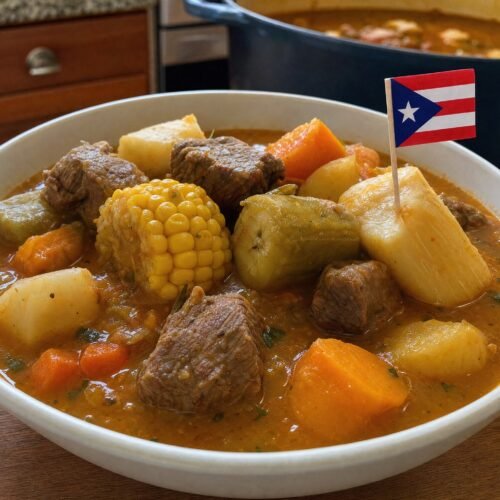
Puerto Rican Sancocho – Beef and Root Vegetable Stew
Equipment
- 10-quart stockpot or large Dutch oven
- Large mixing bowl
- Cutting board
- Sharp chef’s knife
- Vegetable peeler
- Wooden spoon
- Tongs
- Ladle
- Kitchen thermometer
Ingredients
SEASONED BEEF
- 2½ pounds 1.13 kg boneless beef chuck, trimmed and cut into 1½-inch pieces
- 1½ teaspoons adobo seasoning with pepper
- 1 teaspoon dried oregano
- ½ teaspoon ground black pepper
FOR BROWNING AND THE STEW BASE
- 3 tablespoons 45 ml olive oil, divided
- ⅓ cup 80 g Puerto Rican sofrito
- 3 garlic cloves finely minced
- ½ cup 115 g tomato sauce
- 1 packet sazón with coriander and annatto approximately 1½ teaspoons
- 2 bay leaves
- 8 cups 1.9 liters low-sodium beef broth
- Up to 2 cups 480 ml hot water, only if needed
ROOT VEGETABLES
- 12 ounces 340 g peeled yuca, cut into 1½-inch pieces
- 12 ounces 340 g peeled white yautía or malanga, cut into 1½-inch pieces
- 1 large green plantain peeled and cut into 1½-inch pieces
- 2 medium Yukon Gold or russet potatoes approximately 1 pound or 450 g, cut into 1½-inch pieces
- 1 pound 450 g peeled calabaza, kabocha squash or butternut squash, cut into 2-inch pieces
- 2 large carrots approximately 8 ounces or 225 g, cut into 1-inch pieces
- 2 ears of corn husks removed and each ear cut into 3 pieces
FOR FINISHING
- ¼ cup fresh cilantro or culantro roughly chopped
- Salt only if needed after tasting
OPTIONAL FOR SERVING
- Cooked white rice
- Sliced avocado
- Puerto Rican pique or hot sauce
Instructions
SEASON THE BEEF
- Pat the beef dry with paper towels and place it in a large mixing bowl.
- Add the adobo, oregano, black pepper and lime juice. Toss until every piece is evenly seasoned.
- Cover and let the beef rest in the refrigerator for 30 minutes.
- While the beef rests, peel and cut all the root vegetables. Keep the yuca, yautía, plantain and potatoes covered with cold water to prevent discoloration. Drain them well before cooking.
BROWN THE BEEF
- Remove the beef from the refrigerator. Heat 2 tablespoons of olive oil in a 10-quart stockpot or large Dutch oven over medium-high heat.
- Working in two or three batches, add the beef in a single layer. Do not overcrowd the pot.
- Brown each batch for approximately 5–6 minutes, turning the pieces so several sides develop a deep brown color. The beef will not be fully cooked at this stage.
- Transfer the browned beef to a clean plate. Add a small portion of the remaining tablespoon of oil between batches if the bottom of the pot becomes dry.
PREPARE THE STEW BASE
- Reduce the heat to medium. Add any remaining olive oil and the sofrito.
- Cook the sofrito for 2–3 minutes, stirring frequently and scraping the browned flavor from the bottom of the pot.
- Add the minced garlic and cook for 30 seconds.
- Stir in the tomato sauce and sazón. Cook for 1 minute, stirring continuously.
- Return the browned beef and any collected juices to the pot.
- Add the bay leaves and 8 cups of low-sodium beef broth.
- Increase the heat to medium-high and bring the broth to a gentle boil.
- Reduce the heat to low, cover the pot and maintain a gentle simmer for 60 minutes. Stir approximately every 20 minutes.
ADD THE FIRM VEGETABLES
- After the beef has simmered for 60 minutes, add the corn, yuca, yautía, green plantain and carrots.
- If the ingredients are not mostly covered with liquid, add enough hot water to cover them. Do not add more than 2 cups unless absolutely necessary.
- Return the stew to a gentle simmer. Cover and cook for 20 minutes.
ADD THE POTATOES AND CALABAZA
- Add the potatoes and calabaza. Stir carefully so the vegetables remain intact.
- Cover and simmer gently for another 20–25 minutes, or until the beef is fork-tender and all the vegetables can be easily pierced with a fork.
- The beef must reach a minimum internal temperature of 145°F (63°C). However, beef chuck will need the full simmering time to become properly tender.
- If the broth is thinner than desired, remove the lid and simmer for 5 minutes. For a naturally thicker broth, mash two or three pieces of softened calabaza against the side of the pot and stir them into the liquid.
- Remove and discard the bay leaves.
- Stir in the chopped cilantro or culantro.
- Taste the broth before adding salt. Add only a small amount if needed.
SERVE
- Ladle the hot sancocho into deep bowls, making sure each portion contains beef, broth, corn and a mixture of root vegetables.
- Serve by itself or with cooked white rice, sliced avocado or Puerto Rican pique on the side.