Quesitos de Guayaba y Queso (Puerto Rican Guava Pastries)
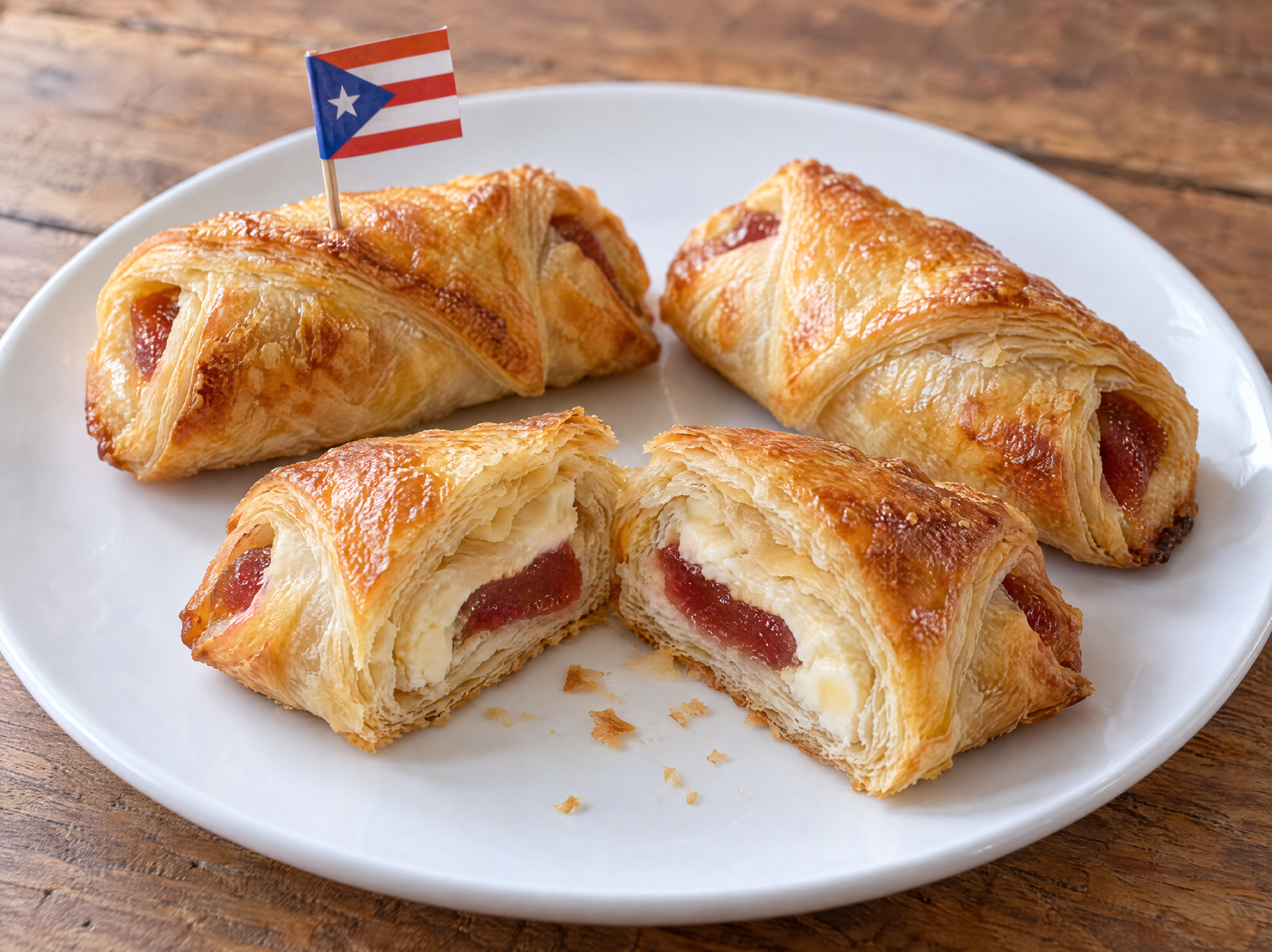
The appeal of quesitos de guayaba y queso is in that first bite: crisp pastry gives way to soft cream cheese and a ribbon of sweet guava. The cheese brings just enough tang to balance the fruit, and a light sugar glaze adds shine to the golden layers.
For this recipe, I wanted to keep the preparation approachable by using ready-made puff pastry. Making the pastry from scratch is a separate project; here, the attention goes into balancing the filling and getting the dough baked through. Two sheets make 18 quesitos, a useful batch for sharing over coffee.
Quesitos are Puerto Rican cheese-filled pastries, and this version adds guava paste to the lightly sweetened cream cheese. The side corners overlap across the center, leaving the ends slightly open so a little filling remains visible.
What to buy—and what to leave on the shelf
Choose firm guava paste, often labeled pasta de guayaba, that you can cut into thin strips. Guava jam may seem like an easy replacement, but its softer consistency and different moisture content can cause it to spread and leak.
For the cheese, use full-fat block cream cheese, softened enough to mix with the sugar and vanilla. Spreadable tub products and whipped cream cheese can produce a looser filling. Stir until smooth without beating in lots of air.
The dough should be puff pastry, rather than phyllo, pie crust, or crescent dough. This recipe uses two sheets totaling approximately 490 g. Package sizes vary, so check the weight as well as the number of sheets.
The filling can be soft; the pastry should stay cold. That’s the balance to keep in mind as you work.
After rolling and cutting the pastry into squares, arrange the filling in a narrow line down the center of each diamond. Dividing it evenly before folding helps prevent the last few pastries from ending up nearly empty—or the first few from being overfilled.
Each quesito gets about 14 g of cream cheese mixture and 12–13 g of guava paste. Leave the overlapping corners clear, use a little egg wash to help seal them, and press firmly. If the pastry becomes sticky or difficult to lift, put it back in the refrigerator briefly instead of forcing the fold.
Once the tray is shaped, the 15-minute chill firms the pastry before baking. This is a useful moment to clear the work surface and prepare for the finishing glaze.
A golden top is only part of the picture
These quesitos bake in a 400°F (200°C) conventional oven. Look for visibly flaky edges and golden bases as well as color on top. Pastry that looks finished from above can still be pale and soft underneath the filling.
Give the pastries room to expand on the trays. If your oven is crowded with both trays inside, bake one at a time and leave the second refrigerated until needed.
Brush the baked quesitos sparingly with the sugar glaze. You want a thin finish that catches the light, with the crisp layers still noticeable beneath it. More syrup doesn’t improve the pastry; it can soften the surface.
Allow at least 15 minutes of cooling before serving, and check the filling before taking a bite. Guava paste holds heat longer than the outside of the pastry might suggest.
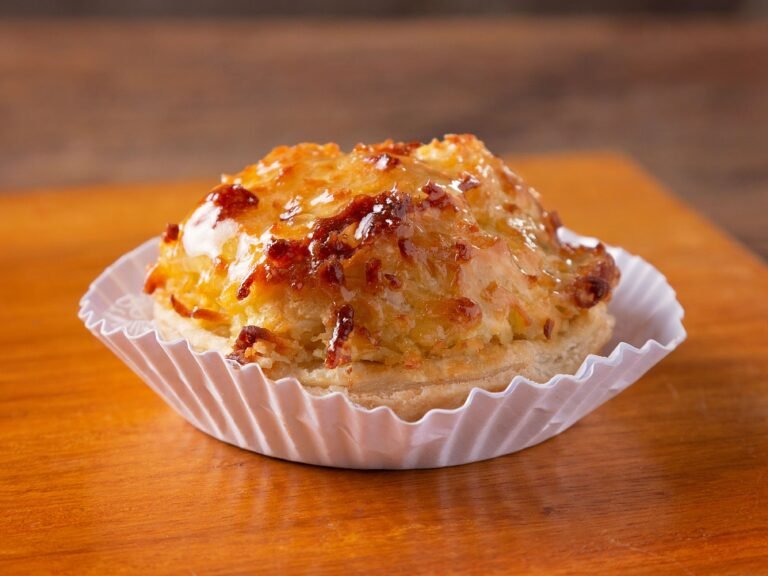
I’d keep the serving simple: a warm quesito, a cup of coffee, and a plate to catch the flakes. For a small assortment, besitos de coco add a chewy coconut option alongside the crisp pastry. Another morning, when there’s time for a yeast dough, pan de Mallorca con mantequilla y azúcar offers a softer, buttery bake.
The quesitos are best the day they’re made. Refrigerate leftovers in a covered container within two hours and use them within three days. To bring back some crispness, warm them on a baking sheet at 325°F (165°C) for about 8–12 minutes, then let the filling cool slightly before enjoying.
Quesitos de Guayaba y Queso
Equipment
- Two large baking sheets
- Parchment paper
- Rolling Pin
- Ruler
- Sharp knife or pizza cutter
- Mixing bowl
- Spatula
- Kitchen scale
- Measuring cups and spoons
- Small bowl
- Pastry brush
- Small saucepan
- Wire cooling rack
Ingredients
PASTRY
- 1 package frozen puff pastry containing 2 sheets (17.3 oz / approximately 490 g), thawed according to package instructions but kept cold
- 1 tablespoon all-purpose flour 8 g, for lightly dusting the work surface
FILLING
- 8 oz full-fat block cream cheese 226 g, softened
- 2 tablespoons granulated sugar 25 g
- 1 teaspoon vanilla extract 5 ml
- 8 oz firm guava paste 226 g, cut into 18 equal thin portions
EGG WASH
- 1 large egg
- 1 tablespoon water 15 ml
LIGHT SUGAR GLAZE
- 2 tablespoons granulated sugar 25 g
- 2 tablespoons water 30 ml
Instructions
- Thaw the puff pastry according to its package instructions. Keep it refrigerated until ready to shape. Soften the cream cheese just enough to mix easily.
- Position oven racks in the upper and lower thirds of the oven. Preheat to 400°F (200°C) using a conventional oven setting. Line two large baking sheets with parchment paper.
- Mix the cream cheese, 2 tablespoons sugar, and vanilla in a bowl until smooth. Avoid whipping in excessive air.
- Divide the guava paste into 18 equal portions, approximately 12–13 g each. Cut each portion into a thin strip about 2½ inches long, or use several small pieces arranged in a short line.
- Beat the egg with 1 tablespoon water in a small bowl to make the egg wash.
- Lightly flour the work surface. Gently roll one cold pastry sheet into an approximately 12-inch square. Cut it into nine equal 4-inch squares. Repeat with the second sheet. If the pastry becomes soft or sticky, refrigerate it briefly before continuing.
- Arrange each square like a diamond. Divide the cream cheese mixture evenly among the 18 squares, using approximately 14 g per pastry. Spread it in a short line from the upper corner toward the lower corner, leaving about ½ inch clear at both ends.
- Place one portion of guava paste over the cream cheese on each square. Keep the filling narrow so the side corners can overlap comfortably.
- Fold the left corner over the filling. Lightly brush the overlapping area with egg wash, then fold the right corner over it. Press the overlapping pastry firmly together. Leave the two ends slightly open.
- Transfer the pastries to the prepared baking sheets, leaving at least 2 inches between them. Refrigerate for 15 minutes to firm the dough.
- Brush the tops lightly with egg wash, avoiding drips down the exposed cut edges. Discard any unused egg wash.
- Bake at 400°F (200°C) for 20–25 minutes, until puffed and golden with visibly flaky edges and golden bases. Rotate the trays and swap their positions halfway through baking. If baking one tray at a time, keep the second tray refrigerated until needed.
- While the pastries bake, combine the glaze ingredients—2 tablespoons sugar and 2 tablespoons water—in a small saucepan. Bring to a gentle simmer, stirring until the sugar dissolves, then remove from the heat.
- Brush the freshly baked quesitos lightly with the sugar glaze. Use only enough for a thin shine; excess syrup can soften the crisp pastry.
- Let the quesitos cool for at least 15 minutes before serving. Serve warm rather than piping hot, because the guava filling retains heat.
2 Comments